
Build Website for Me: What Albany Businesses Need to Know
Not sure if you should build website for me or just repair it? Get Albany-area pricing, timelines, and a free consultation from JMB, no obligation.

Typing "build website for me" into Google is usually the first move a small-business owner makes once they realize the current site isn't pulling its weight. Maybe the contact form stopped sending leads, the layout breaks on phones, or the whole thing simply looks ten years old. However, before you hire anyone, it helps to know what "build" actually means for your situation, a full custom rebuild, or a focused repair of what you already have. This guide walks through both paths, what each one costs in the Albany, New York area, and how an owner-led shop like JMB Creative decides which one fits.
What Does "Build Website for Me" Really Mean for Albany Small Businesses?
Direct answer: "Build website for me" is the phrase small-business owners search when they want a professional to design, build, or fix a website rather than tackle it themselves. In practice, it can mean anything from a quick repair to a brand-new custom site, depending on how much of the current site still works.
For some businesses, that means repairing a broken contact form, fixing a mobile layout that cuts off text, or updating a phone number that changed two years ago. For others, the site is outdated enough, in platform, structure, and content, that patching it no longer makes sense. Understanding which category your business falls into is the real first step, and it's the one that should happen before any quote is written.
In addition, the phrase often comes from frustration rather than a clear technical diagnosis. A business owner doesn't necessarily know whether their site needs a new contact-form plugin or a ground-up rebuild; they just know it isn't bringing in calls. Consequently, a short site review, rather than a guess, should always come before any contract is signed.
Before you build website for me, a short review of the current site usually settles whether to repair or rebuild.
DIY Website Builders vs. Hiring Someone to Build Your Website
Before comparing repair versus rebuild, it's worth answering a more basic question: should you build it yourself with a drag-and-drop tool, or hire someone to build your website for you? Both paths are legitimate, and the right choice depends on your time, your technical comfort, and how much the site needs to actually work for your business, not just look presentable.
When a DIY Website Builder Might Be Enough
A drag-and-drop builder can work reasonably well if your needs are simple. For example, these situations usually fit a self-build approach:
- You need a single-page site with contact information and a few photos
- You're comfortable spending several hours learning a new editor
- The business doesn't rely on the website for most of its leads
- Budget is the primary constraint, not speed or polish
When You Should Hire a Professional Instead
On the other hand, once a website needs to generate calls, bookings, or sales reliably, a professional build typically pays for itself. Specifically, hiring someone to build your website makes more sense when you need custom functionality, consistent branding, search-engine visibility, or simply don't have the hours to spare. A written scope and a single point of contact also remove the guesswork that comes with trial-and-error template editing.
| Factor | DIY Website Builder | Hiring a Professional |
|---|---|---|
| Time investment | High, you do all the setup | Low, scoped and handled for you |
| Custom functionality | Limited to template features | Built around your workflow |
| Accountability | You own every mistake | Written scope, before-and-after summary |
Do You Need a Full Website Build, or Just a Repair?
Not every broken website needs to be torn down and rebuilt from scratch. Specifically, if the underlying structure is sound and only a handful of elements are broken, a scoped repair is usually faster and less expensive than a full website build. On the other hand, if the platform is abandoned, the design can't support mobile traffic, or the content no longer matches the business, a full custom website design is the more honest recommendation.
Signs Your Current Site Can Still Be Saved
Several common problems point toward a repair instead of a rebuild. For example, these issues are usually fixable within a short, scoped engagement:
- A contact form that doesn't send emails or submissions
- A mobile layout where text or buttons overlap, rather than a proper responsive design
- Dead links or pages that return a 404 error
- An unclear call-to-action that buries the phone number or quote request
- Outdated hours, services, photos, or team information
If your site matches most of this list, a focused service such as a Website Rescue repair can resolve the problems without the cost of starting over.
Signs You Need a Full Custom Website Design
However, some problems run deeper than a short repair list. Therefore, if your site was built on a platform that's no longer supported, loads slowly on every device, or simply can't represent the business you run today, complete custom websites tend to serve you better long term. For a closer look at how to decide, this comparison of repairing versus rebuilding a website walks through the trade-offs in more detail.
How Much Does It Cost to Build a Website for Your Business?
Direct answer: Costs vary widely based on scope, but a focused repair typically costs far less than a full custom build. For example, a Website Rescue service can address up to five agreed fixes for a flat rate, while complete custom websites are quoted separately based on size and features.
According to Google's own web.dev performance research, roughly 53 percent of mobile visitors abandon a page that takes longer than three seconds to load. As a result, cutting corners on either repair or build work can cost a business more in lost leads than it saves in fees.
| Project Type | Typical Scope | Starting Price |
|---|---|---|
| Website Rescue (repair) | Up to 5 agreed fixes or 4 labor hours | $495 flat |
| Custom website build | Full design, structure, and content | Quoted after review |
For general small-business planning guidance, the U.S. Small Business Administration also recommends budgeting for a website as an ongoing cost of doing business, not a one-time expense.

Scoping the work on paper first keeps costs predictable before any build begins.
How Long Does It Take, and What About Domains, Hosting, and Ongoing Costs?
Typical Timelines for Repairs vs. Custom Builds
Timelines depend heavily on scope. In particular, a scoped repair often wraps up within a few labor hours across a short turnaround, since the fixes are pre-agreed and limited in number. A full custom build, in contrast, commonly takes several weeks, largely because content gathering, design review, and revisions all take real calendar time. Either way, timelines should be confirmed in writing before the project begins, not estimated verbally and forgotten.
Domain, Hosting, and Maintenance: The Costs After Launch
Building the site is only part of the cost picture. Specifically, most businesses also need to budget for a domain name, hosting, and basic maintenance each year, separate from the design or repair fee itself. Similarly, software and plugins that power a site require periodic updates to stay secure, which is one reason the SBA treats a website as an ongoing expense rather than a single purchase. Before you sign a contract, ask directly who owns the domain, where the site is hosted, and what happens if you want to switch providers later. A trustworthy designer will answer all three without hesitation.
Step-by-Step: What Happens When You Hire Someone to Build Your Website
Whether you need a repair or a full rebuild, above all, the process should follow a predictable order. Here's how it typically works with an owner-led shop:
- Site review and scope confirmation. The designer reviews your current website, identifies what's broken or outdated, and confirms a written scope before any work begins.
- Backup before changes. A full backup is taken so the live site can be restored if anything goes wrong during repairs or development.
- Fixes or build work. The agreed repairs are completed, or the new site is designed and built, within the hours or scope confirmed earlier.
- Testing across devices. Forms, links, and layouts are tested on desktop and mobile devices to confirm everything functions as expected.
- Before-and-after summary and launch. You receive a summary of what changed, and the updated site goes live only after you've reviewed it.
What to Look for When Choosing Someone to Design Your Website
Finding the right person to design your website matters as much as the final price. In particular, look for someone who starts with a review of your actual site rather than a generic sales pitch. Similarly, a written scope, spelling out exactly what's included and what isn't, protects both sides from surprise invoices. No work beyond that scope should proceed without your approval.
It also helps to work with a single point of contact instead of a rotating team. For instance, an owner-led shop means one person reviews each site personally, confirms the scope directly with the client, and completes the work. That kind of direct communication matters particularly for Albany and Capital Region businesses that want a local contact rather than a call center.
Beyond basic repair and build work, experience with more complex systems is worth asking about too. JMB Creative, for example, also designed LeadFlow, a workflow platform for home-improvement companies, which shows a track record of turning complicated business processes into clear digital systems, not just static pages.
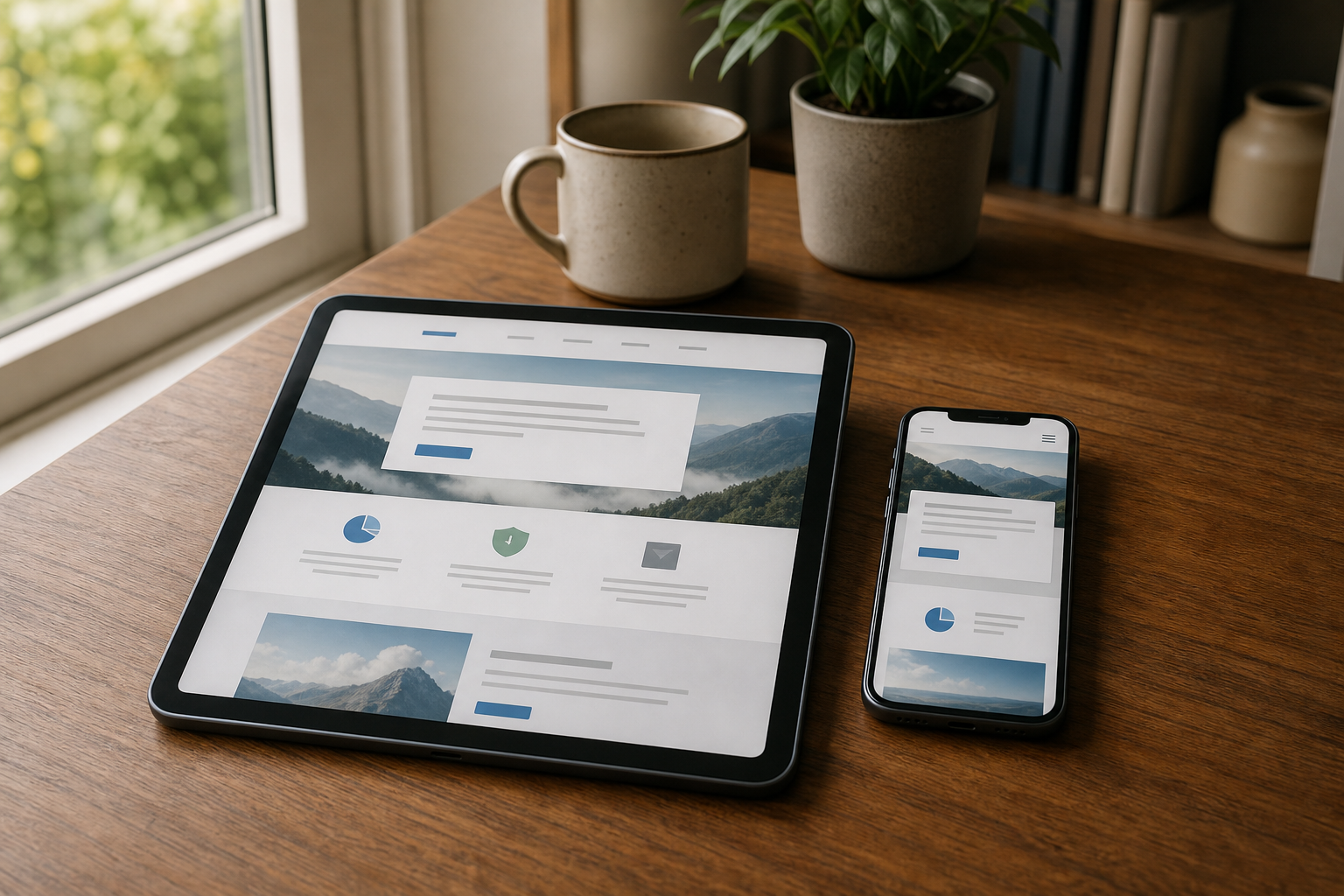
A layout that works equally well on a tablet and a phone is a basic requirement, not a bonus feature.
Mobile Responsiveness, SEO, and Content: What Every Build Needs to Get Right
Mobile-First Isn't Optional
Most website visits now happen on a phone, so mobile responsiveness should be tested as a standard part of any repair or build, not treated as an upgrade. Any reputable designer will check layouts across multiple screen sizes, confirm tap targets aren't too small, and verify that forms submit correctly on mobile before launch.
Basic SEO Checklist for a New or Rebuilt Site
In addition to responsiveness, a handful of foundational items make a measurable difference in search visibility. Before launch, confirm the following:
- Each page has a unique title tag and meta description
- Headings follow a logical order, with one clear H1 per page
- Images include descriptive alt text for both accessibility and search engines
- The site loads quickly, since speed affects both rankings and visitor patience
- Content clearly names the business's location and services for local search
Together, these basics ensure a rebuilt or repaired site doesn't just look better, it actually gets found.
Frequently Asked Questions About Build Website for Me
What does "build website for me" mean, and who should handle it?
It is the search phrase business owners use when they want a professional to design, build, or fix a site instead of doing it themselves. In most cases, that means hiring a web designer or small agency that offers a written scope and clear pricing.
How much does it cost to build a website for a small business?
Costs depend on scope. A focused repair can run a flat rate, such as $495, while complete custom websites are quoted after a review of size, features, and content needs. Always get a written quote before work starts.
How long does it take to build a custom website?
A scoped repair often takes a few labor hours across a short turnaround, while a full custom build commonly takes several weeks depending on content and revisions. Timelines should be confirmed in writing before the project begins.
Can I repair my current website instead of building a new one?
Yes, if the core structure still works and only specific elements are broken, such as a contact form or mobile layout. A short site review can confirm whether repair is realistic before you commit to a full rebuild.
What's the difference between a website repair and a full website build?
A repair fixes specific, agreed problems on an existing site within a limited scope, while a full build replaces the site's design, structure, and often its platform. Repairs are faster and less expensive; rebuilds solve deeper, structural issues.
Should I use a DIY website builder instead of hiring someone?
A DIY builder can work for a very simple one-page presence, especially on a tight budget. However, once the website needs to generate leads consistently, hiring a professional with a written scope typically produces a more reliable result.
Do I need a custom website, or will a template work?
Many small businesses do fine with a well-built template site, as long as it's customized for mobile use and clear calls-to-action. Custom web design becomes worthwhile when your business has workflows a template simply can't support.
What's included in the cost of a website long after it launches?
Beyond the initial build or repair fee, expect ongoing costs for a domain name, hosting, and periodic maintenance or software updates. These are typically billed separately and should be disclosed before you commit to a project.
What should I prepare before I search build website for me?
Before you search "build website for me" and start contacting designers, gather your current login access, a list of problems you want fixed, and a few example sites you like. Having this ready speeds up the review process significantly.
What are common mistakes businesses make when hiring a web designer?
The most common mistakes are skipping a written scope, not backing up the site before changes, and assuming "unlimited revisions" without clear limits. These gaps lead to budget overruns and unclear expectations on both sides.
Will my new or repaired website work well on phones?
Yes, mobile responsiveness should be tested as a standard part of any repair or build, since most website visits now happen on phones. Any reputable designer will test layouts across multiple screen sizes before launch.
Does JMB Creative serve businesses outside of Albany?
JMB Creative primarily serves small businesses across Albany, New York, and the wider Capital Region, working directly with each client. Remote consultations can be arranged for businesses within that general service area.
What happens after my website launches?
You should receive a before-and-after summary showing exactly what changed, along with confirmation that forms, links, and layouts were tested. Any additional work beyond the agreed scope requires separate approval and pricing.
How do I know if my website needs a rescue or a full rebuild?
Start with a site review: if only a handful of specific problems exist, a scoped repair usually makes sense; if the platform or design can't support your business anymore, a rebuild is the better investment. A short consultation can clarify which path fits your situation.
Choosing the Right Next Step for Your Website
In the end, whether you build website for me means a quick repair or a full custom build depends on one thing: how much of your current site still works for your customers. If a handful of specific problems are holding you back, a scoped repair like a Website Rescue can solve them without the cost of starting over. If the platform or design can no longer support your business, separately quoted custom web design is the more honest path forward.
Above all, the right next step starts with an honest site review rather than guesswork. If you're ready to find out which option fits your business, request a consultation with JMB Creative and get a clear, written scope before any work begins.
