
Brochure Design Services Explained: Costs & Process
Brochure design services guide: what's included, typical costs, and the process—plus how web design complements print. Request a consultation today.
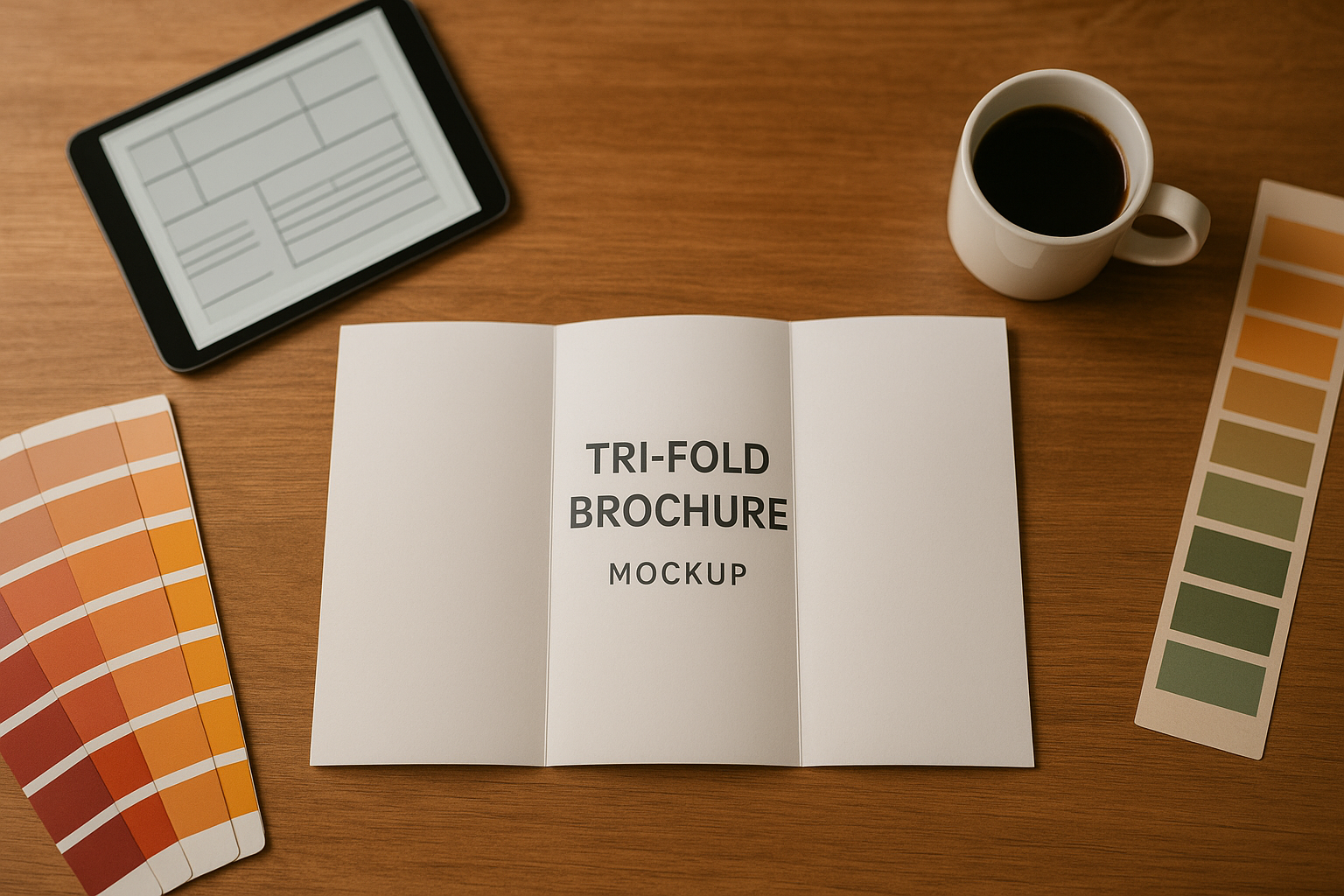
Brochure design services help small businesses turn a stack of blank paper into a clear, persuasive sales tool that explains who you are, what you offer, and why someone should call. Whether you're handing out materials at a trade show or leaving one behind after a sales visit, a well-designed brochure often makes the first real impression a prospect has of your business. In this guide, you'll learn exactly what these services include, what they typically cost, how package tiers usually break down, and how a printed brochure should connect back to your website and digital marketing instead of sitting forgotten in a drawer.
Quick answer: brochure design services are professional engagements that plan, write, lay out, and finalize a printed or digital brochure — covering branding alignment, content organization, visual design, and print-ready file preparation. Most providers sell this work in tiers, with simple bi-fold layouts starting around a few hundred dollars and fully custom, multi-panel projects with original photography running well over a thousand.
Brochure design services combine layout planning, branding, and print preparation into one finished piece.
What Is Included in Professional Brochure Design Services?
Brochure design services cover the full process a designer uses to plan, write, lay out, and finalize a brochure for print or digital distribution. That process usually starts with a conversation about your goals, moves into content organization and layout, and ends with a print-ready file. According to Wikipedia's overview of brochures, these printed pieces have long served as a low-cost way for organizations to communicate detailed information in a portable format.
In practice, a small business usually hires a designer for one of two reasons: launching a brand-new brochure from scratch, or refreshing an outdated one that no longer matches current services, pricing, or branding. Either way, the goal stays the same — a clear, well-organized piece that moves a reader toward contacting you.
Specifically, a complete engagement typically includes several distinct pieces of work. First, the designer reviews your existing branding, logo, and color palette so the new piece feels consistent. Next, they organize your raw content — services, pricing, contact details — into a logical flow across panels. Afterward, the designer builds a layout, selects imagery, and applies typography that's easy to scan. Finally, they prepare print-ready files with correct bleed (the extra printed area trimmed off after printing so colors reach the edge of the page), resolution, and color settings so your printer doesn't run into last-minute issues. Some designers also offer light copywriting support if your content needs tightening before it goes to layout.
Why Small Businesses Still Invest in Brochure Design
Despite the shift toward digital marketing, printed materials still carry real weight. For example, printed pieces tend to perform well in situations where a webpage simply can't, such as handing something to a prospect at a networking event or leaving it at a front desk. Industry benchmark data compiled by direct-mail researchers has long shown that physical, tangible marketing materials often generate stronger recall than a digital ad seen once and forgotten.
In addition, a brochure gives you full control over the narrative. Unlike a website visitor who might leave after five seconds, a brochure holder tends to read through the content at their own pace. As a result, professional brochure design still earns a place in many small-business marketing budgets, particularly for service businesses that rely on trust and local reputation.
Types of Brochures a Design Service Can Create
Not every brochure looks the same, and the right format depends on your content and how it will be used. Here are the most common options:
- Bi-fold brochures: one fold, four panels — simple, visual, and ideal for a single core message.
- Tri-fold brochures: two folds, six panels — ideal for more detailed service lists or multiple offerings.
- Z-fold brochures: an accordion-style fold that reads like a timeline or step-by-step process.
- Gate-fold brochures: two panels fold inward toward the center, creating a reveal effect that works well for a dramatic product or location photo.
- Multi-page booklets: stapled or bound pages for catalogs, menus, or detailed portfolios with more content than a folded sheet can hold.
Specifically, a service business with three or four offerings often does well with a tri-fold, while a single-product company may only need a simple bi-fold flyer. A business with a longer story to tell — such as a nonprofit sharing a timeline of impact — might lean toward a z-fold or booklet instead.
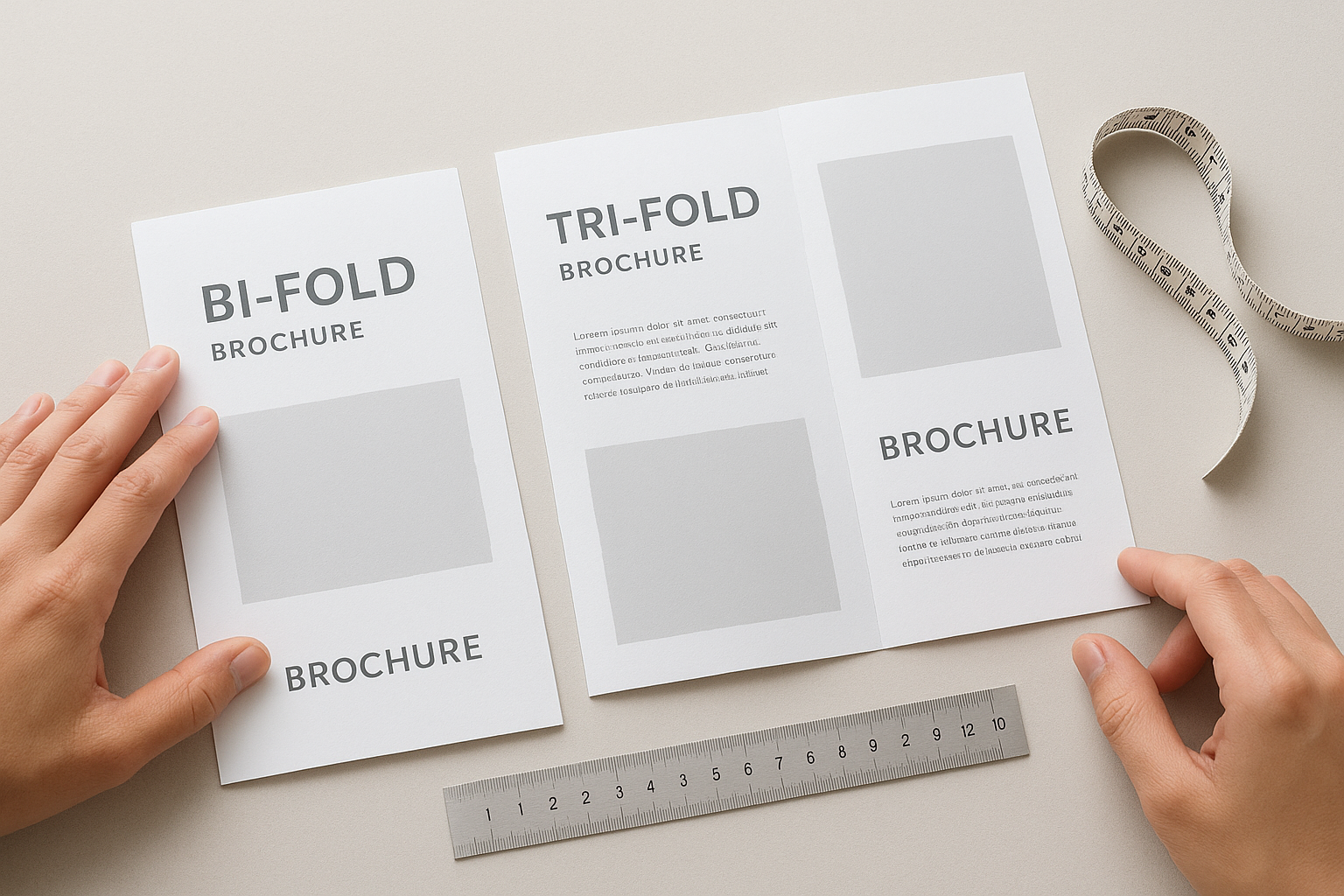
Choosing the right fold and panel count is one of the first decisions in any brochure design project.
Brochure Design Packages: What to Expect at Each Tier
Most agencies that offer brochure design services structure their packages into tiers, so it helps to know what each level typically covers before you request a quote. Below is a realistic breakdown of how these packages usually look, so you can compare apples to apples when reviewing proposals.
Essential Package
Best for a single bi-fold or simple tri-fold using an existing template structure.
- One layout concept, 1–2 revision rounds
- Logo and brand color integration
- Print-ready PDF file delivery
Professional Package
Best for a custom tri-fold with original layout work and content organization.
- Two layout concepts, 2–3 revision rounds
- Light copywriting and content editing support
- Print-ready files plus editable source file
Premium Custom Package
Best for multi-page booklets or trade-show pieces with original photography.
- Fully custom layout and unlimited reasonable revisions
- Photography direction and sourcing
- Full file package plus matching digital version
Rather than treating these tiers as rigid rules, use them as a starting conversation. In particular, ask any provider to confirm which tier best matches your panel count, photography needs, and revision expectations before you sign off on a price.
How Much Do Brochure Design Services Cost?
Pricing for brochure design services varies quite a bit depending on complexity. A simple template-based bi-fold might run a few hundred dollars, while a fully custom tri-fold with original photography and copywriting can run well over a thousand. Printing costs are usually separate and depend on paper stock, quantity, and finish, so always ask whether a quote covers design only or design plus print.
Because of this range, it's worth asking any designer for a written scope before work begins. A clear scope should spell out how many panels are included, how many revision rounds you get, and whether source files are part of the deliverable. This protects you from surprise charges later and gives you something concrete to compare across multiple quotes.
The Brochure Design Process, Step by Step
Most brochure projects follow a predictable sequence. Understanding this process ahead of time helps you plan your timeline and gather what the designer will need.
- Define goals and audience. Decide what the brochure needs to accomplish, such as generating calls or explaining a service, and identify exactly who will be reading it so the message stays focused.
- Gather content and brand assets. Collect your logo files, brand colors, photos, service descriptions, and any testimonials so the designer has everything needed to build an accurate first draft.
- Choose a format and layout. Select a bi-fold, tri-fold, or multi-page format based on how much content you have and where the brochure will be used.
- Review drafts and request revisions. Review the initial layout for accuracy, clarity, and visual appeal, then provide specific written feedback so the designer can make focused, efficient revisions.
- Proofread and finalize print-ready files. Check every panel for spelling, pricing, and contact details before approving final files, then confirm bleed, color mode, and resolution settings for the printer.
Typical Turnaround Times for Brochure Design Projects
Most brochure projects take one to three weeks from kickoff to final files, depending on how quickly content and approvals move. A simple Essential-tier bi-fold with ready content can sometimes move faster, while a Premium custom booklet with original photography naturally takes longer. Rush projects are sometimes possible but usually cost more and limit the number of revision rounds, so build in buffer time whenever a trade show or event deadline is involved.
DIY Templates vs. Professional Brochure Design Services
Template tools can work for very simple, low-stakes projects, such as a one-time handout for a small community event. However, templates often produce generic layouts that don't reflect your actual brand voice or stand out from competitors using the same free templates.
By contrast, professional brochure design services customize every element to your business, test the layout for print accuracy, and usually produce a more polished result. Consequently, for anything representing your business long-term — like a sales leave-behind or trade show handout — professional design tends to pay for itself through stronger impressions and fewer costly reprints caused by file errors.
Pairing Print Brochures with Your Website and Digital Marketing
A brochure rarely works alone. In fact, the best print pieces connect directly back to your digital presence through a website link, QR code, or social handle. If a prospect picks up your brochure and then visits a website that looks outdated or has a broken contact form, that strong first impression can fall apart quickly.
This is where web design and print design need to stay in sync. JMB Creative works with small businesses across Albany, New York, and the Capital Region on exactly this kind of digital follow-through — reviewing an existing site, confirming a clear scope, and fixing issues like broken contact forms, unreadable mobile layouts, or outdated content through its web design services. For businesses whose current site can't support new growth at all, a custom rebuild is scoped and quoted separately rather than forced into a smaller fix. In fact, this guide to choosing the right web design company is a useful next read once your brochure content is locked.
Beyond the website itself, a cohesive marketing presence often extends to search visibility so prospects can find you online after meeting you in person, online sales tools for businesses that also sell directly through their site, and even short-form video content that echoes the same message found in your printed brochure.
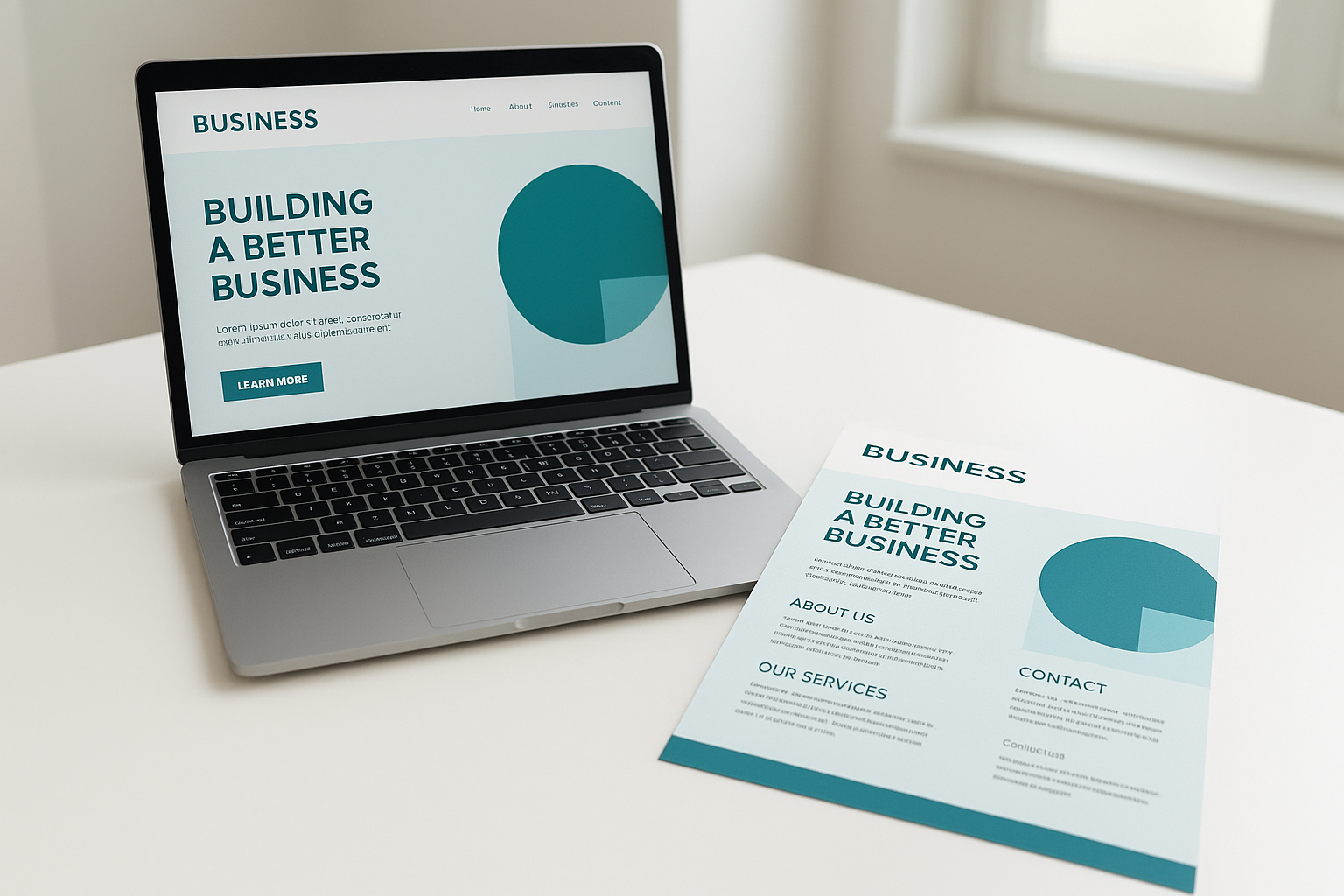
Consistent branding between a printed brochure and your website helps build trust at every touchpoint.
Common Brochure Design Mistakes to Avoid
Even well-intentioned brochures can fall flat due to a few repeat mistakes. Overloading a single panel with too much text is one of the most common issues, since readers tend to skim rather than read every word — a behavior pattern well documented by the Nielsen Norman Group's research on scanning behavior. Low-resolution images are another frequent problem, especially when logos or photos are pulled directly from a website rather than sourced at print quality.
Above all, many brochures bury the call to action instead of making it obvious. A reader should know within seconds exactly how to reach you, whether that's a phone number, website address, or QR code. The U.S. Small Business Administration's marketing guidance consistently emphasizes clarity of message as a core principle across any marketing material, print or digital. Finally, skipping a proofreading pass before print is a costly mistake, since reprinting an entire batch over a typo or wrong phone number eats straight into your budget.
Which Industries Benefit Most From Professional Brochure Design?
While almost any business can use a brochure, certain industries tend to see the strongest return. Service businesses such as law firms, contractors, and medical practices rely on brochures to explain detailed offerings in a format clients can take home and reference later. Similarly, real estate agents often use brochures as leave-behinds for listings or open houses, while financial advisors use them to walk clients through complex service tiers in plain language.
Nonprofits and schools also lean heavily on brochure design services for donor outreach, event programs, and enrollment materials, since a printed piece feels more personal than another email. Meanwhile, print specification standards referenced by organizations like Printing Industries of America help ensure that whatever industry you're in, your files are built to the correct bleed, resolution, and color profile before they reach a press.
How to Choose the Right Brochure Design Service for Your Business
When comparing brochure design services, start by reviewing a designer's portfolio for similar print projects, not just website or logo work. Specifically, look for examples that show clean typography, logical content flow, and consistent branding across panels.
It also helps to ask upfront about pricing structure, number of revision rounds, and whether final source files are included. A designer who provides a written scope before starting — rather than an open-ended estimate — tends to be easier to work with and less likely to produce surprise charges. Before signing anything, consider asking these questions:
- Which package tier matches my panel count and photography needs?
- How many revision rounds are included, and what happens if I need more?
- Will I receive editable source files, or only the final print-ready PDF?
- Is printing included, or will I need to arrange that separately?
- Can this designer also help keep my website and digital marketing consistent with the new brochure?
Frequently Asked Questions About Brochure Design Services
What are brochure design services?
Brochure design services are professional design engagements that plan, lay out, and finalize printed or digital brochures used for marketing. They typically cover concept development, content organization, visual design, and print-ready file preparation.
How much do brochure design services typically cost?
Simple bi-fold brochures often range from a few hundred dollars for template-based work to over a thousand dollars for fully custom tri-fold or multi-page pieces. Cost depends on the number of panels, revisions, photography needs, and whether printing is included.
What do brochure design packages usually include at each tier?
Entry-level packages usually include one layout concept and a couple of revision rounds, mid-tier packages add copywriting support and editable source files, and premium packages add fully custom layouts, photography direction, and unlimited reasonable revisions.
How long does brochure design take from start to finish?
Most brochure projects take one to three weeks, depending on how quickly content and approvals move. Rush projects are sometimes possible but usually cost more and limit the number of revision rounds.
What's the difference between a tri-fold and a bi-fold brochure?
A bi-fold brochure has a single fold creating four panels, while a tri-fold has two folds creating six panels. Tri-folds suit businesses with more services to explain, while bi-folds work well for simple, visual-heavy messages.
Can I design a brochure myself using templates instead of hiring a designer?
Template tools work for very simple, low-stakes projects where brand consistency matters less. However, a professional designer typically produces stronger layouts, better print preparation, and messaging that matches the rest of your branding.
What files do I receive after a brochure design project is finished?
You should receive a print-ready PDF with correct bleed and color settings, along with editable source files when agreed in the scope. Keeping these files on hand makes future updates faster and cheaper.
Do brochure design services include printing the final brochures?
Printing is sometimes bundled in but is more often handled separately through a print shop of your choice. It's important to confirm this detail upfront so there are no surprise costs.
What common mistakes should I avoid when designing a brochure?
Common mistakes include cramming too much text onto one panel, using low-resolution images, and burying the call to action. A clean layout with one clear next step performs far better than a crowded page.
How do I choose the right brochure design service for my business?
Look for a designer who asks about your goals and audience before sketching layouts, and who shows a portfolio with similar print work. Clear pricing, a written scope, and a reasonable timeline are also good signs of a trustworthy provider.
Should my brochure match my website's design?
Yes, consistent colors, fonts, and messaging between print and digital materials build trust and brand recognition. If your website looks outdated compared to a new brochure, it may be worth a site review alongside the print project.
What information belongs on a good brochure?
A strong brochure covers who you are, what problem you solve, key services or products, and one clear call to action such as a phone number or website. Supporting details like testimonials or a short list of benefits can reinforce the message without overwhelming the reader.
Are printed brochures still effective in a digital marketing world?
Yes, printed materials still perform well for in-person meetings, trade shows, and local outreach where a physical handout builds credibility. Pairing a brochure with a QR code or website link connects the print piece to your online presence.
Can brochure design services help with other marketing materials too?
Many designers who offer brochure design services also handle related materials like flyers, business cards, and one-page sell sheets. Using the same designer across pieces keeps your branding consistent.
Do brochure design services work for nonprofits and schools?
Yes, nonprofits and schools regularly use brochure design services for donor outreach, event programs, and enrollment materials. The same clarity principles apply: one clear message per panel and an obvious next step for the reader.
Final Thoughts on Brochure Design Services
In the end, brochure design services give small businesses a dependable, tangible way to explain their value and earn trust in person. A well-planned brochure — with clear content, consistent branding, a sensible package tier, and a visible call to action — can keep working for you long after the initial print run. Just as importantly, that brochure should lead somewhere solid, whether that's a working phone line or a website that's ready to convert the interest it generates. If your current site is the weak link in that chain, a focused review and scoped repair, or a fuller custom web design project, can make sure your print and digital marketing finally tell the same story.
