
Brochure Design Service Guide for Small Businesses
Looking for a brochure design service? Learn what to expect, what it costs, and how to choose a designer who delivers clear, effective print marketing.
A brochure design service takes scattered product details, pricing sheets, and brand assets and turns them into a single, well-organized print piece that a prospect will actually pick up, read, and keep. Whether you need a simple two-panel handout for a trade show or a detailed multi-panel piece explaining a full product line, the right design partner shapes both the look and the message so the brochure does real marketing work instead of collecting dust in a drawer.
Quick answer: A brochure design service plans, designs, and prepares a printed or digital brochure — covering layout, imagery, copy placement, and print-ready output — so your business ends up with a file that clearly communicates an offer. Most small-business projects take one to three weeks, and pricing typically runs from a few hundred dollars for a simple layout to well over a thousand for a custom, photography-heavy piece.
What Is a Brochure Design Service?
A brochure design service is a professional offering, usually provided by a freelance designer or small design studio, that handles the visual layout and structure of a printed or digital brochure. Unlike a website, which updates constantly, a brochure is a fixed piece meant to communicate one clear message well — which is exactly why the layout decisions matter so much more than they might for a webpage you can edit tomorrow.
Most brochure design services follow a similar core: understanding the goal of the piece, organizing content into panels, choosing fonts and colors that match your brand, and preparing the final file for print or digital distribution. Some designers also handle light copywriting, while others expect finished text from the client. Therefore, it is worth clarifying scope before you sign anything.
According to Wikipedia's overview of brochures, the format has remained a staple of print marketing precisely because it is portable, tangible, and easy to hand to a prospect in person. That portability is exactly why many small businesses still invest in brochures alongside a website.
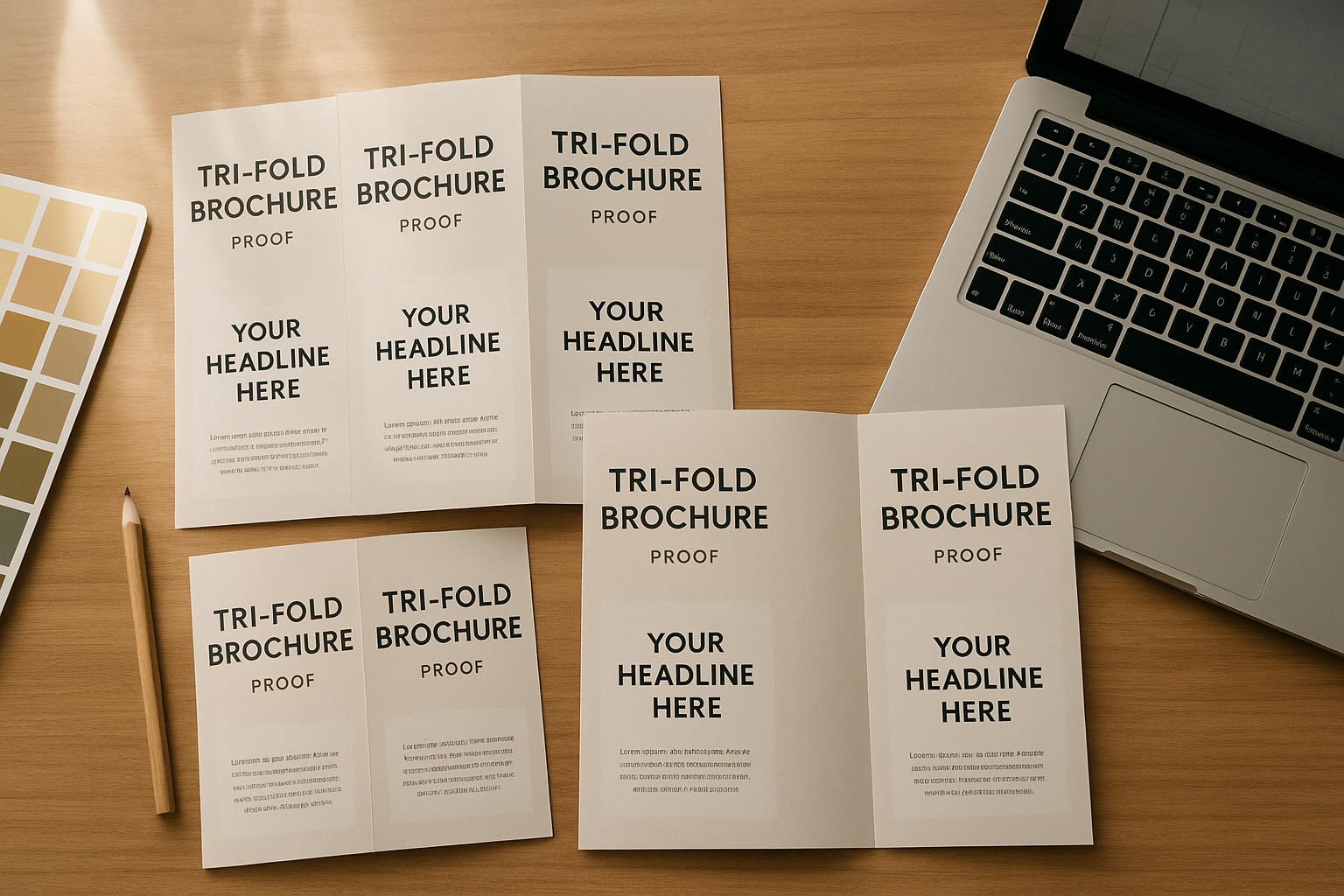
A finished brochure design service project typically includes layout proofs, color matching, and a final print-ready file.
Why Small Businesses Still Invest in Professional Brochure Design
In an era dominated by digital marketing, it might seem surprising that print brochures still earn a place in small-business budgets. However, Two Sides North America, an organization that tracks print and paper usage trends, has found that most consumers report reading printed marketing materials they receive and keeping some for later reference — a habit far less common with digital ads that vanish after a quick glance.
Brochures also do something a website cannot: they travel. A business owner can hand one across a table, leave a stack at a local event, or mail one to a prospect who is not actively searching online. As a result, a well-designed brochure often works as a bridge between an in-person conversation and a later visit to your website.
In addition, the U.S. Small Business Administration's marketing guidance points out that layered marketing — combining digital channels with tangible, offline materials — tends to reinforce brand recall more effectively than relying on a single channel alone. For businesses that already maintain a website, pairing it with a brochure designed to reflect the same brand look creates consistency across every touchpoint a customer encounters.
Types of Professional Brochure Design Formats
Not every brochure serves the same purpose, so a custom brochure design project typically starts by picking the right format for the content and the audience.
- Bi-fold brochures — one fold, four panels, suited to simple, visual-forward messages.
- Tri-fold brochures — two folds, six panels, good for explaining multiple services or steps.
- Z-fold and roll-fold brochures — accordion-style panels that guide the eye in one continuous path, often used for timelines or step-by-step processes.
- Gatefold brochures — panels that open outward, often used for a dramatic reveal or a premium feel.
- Single-panel rack cards and flyers — compact, single-sheet pieces for countertop displays or quick handouts.
- Digital brochures — interactive PDFs or web-based versions designed for email and on-screen viewing.
Specifically, a strong custom brochure design service will recommend a format based on how much content you need to cover and where the piece will be distributed, rather than defaulting to the same template for every client.
What's Included in a Full-Service Brochure Design Package
Beyond the layout itself, a complete brochure design service usually bundles several supporting tasks that are easy to overlook until they're missing. Understanding these inclusions upfront helps you compare quotes accurately instead of comparing apples to oranges.
- Concept and messaging strategy — deciding what story the brochure needs to tell and in what order.
- Layout and panel design — arranging text, images, and white space across each fold.
- Light copywriting or editing — tightening headlines and body copy so they fit the space and read clearly.
- Photography or stock image sourcing — either using your existing photos or sourcing licensed images that match your brand.
- Proofing and revisions — one or more rounds of feedback before final approval.
- Print-ready file preparation — exporting files in the exact color mode, resolution, and bleed settings a printer requires.
How a Brochure Design Project Works, Step by Step
Although every designer runs things a little differently, most brochure design service engagements follow a similar sequence. Understanding this process in advance helps you prepare the right materials and avoid delays.
- Define the goal and audience. Decide what the brochure needs to accomplish, such as explaining services at a trade show or supporting a sales conversation, before any design work begins.
- Gather brand assets and content. Collect your logo files, brand colors, existing marketing copy, and photos so the designer has everything needed to start accurately and on schedule.
- Request a scope and quote. Ask for a written scope covering panel count, revision rounds, delivery format, and total cost before design work starts, so there are no surprises later.
- Review the draft layout. Examine the first draft for message clarity and whether the call to action stands out, then give specific written feedback rather than vague impressions.
- Approve final files and proof the print run. Confirm a physical or digital proof matches your brand accurately, check color and spacing one last time, then approve files for the printer.
- Distribute across channels. Hand out print copies at events and in-store, mail them to prospects, and share the digital version through email or your website for maximum reach.
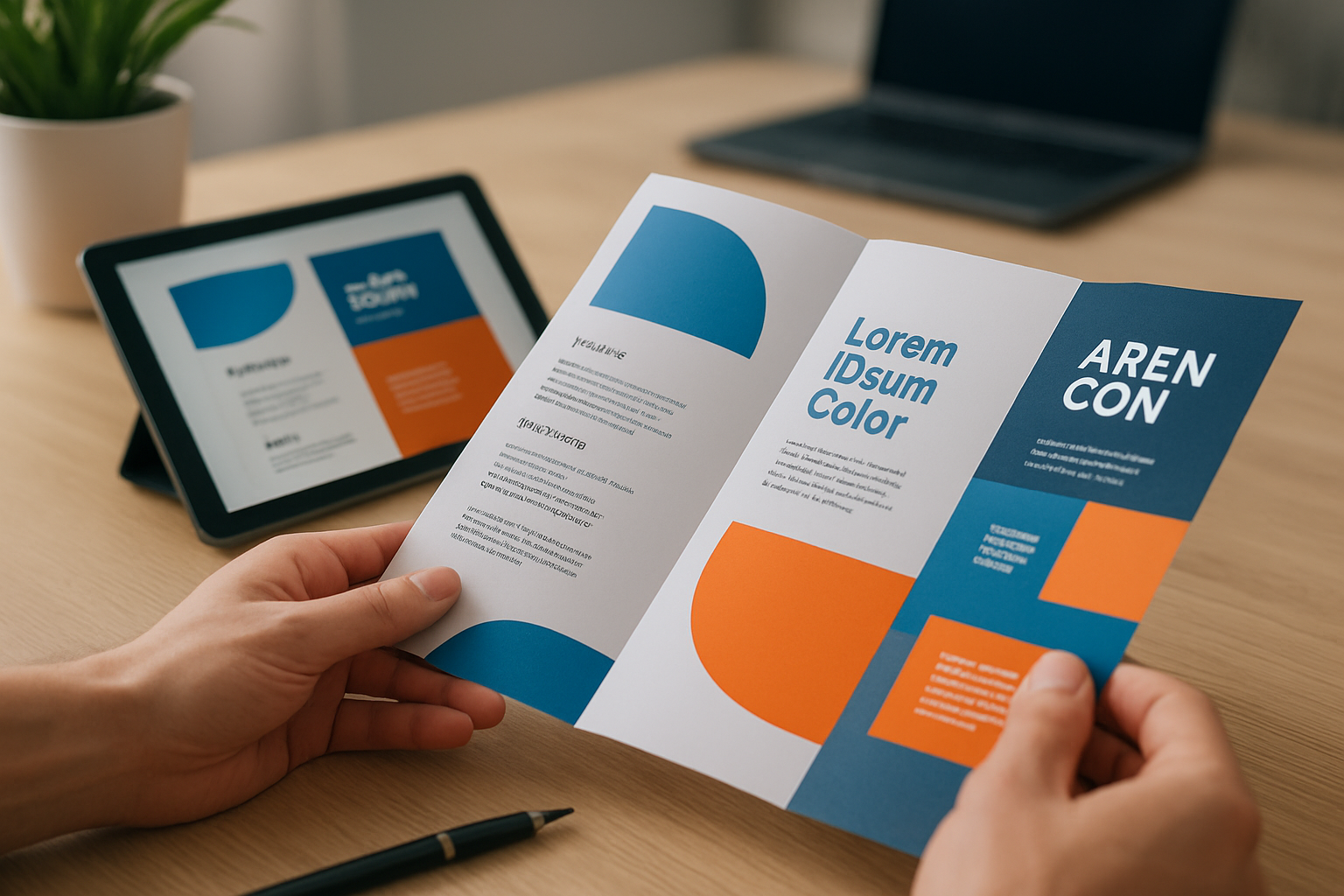
Reviewing a physical proof alongside the digital layout helps catch color and spacing issues before printing.
Brochure Design Service Cost: What You Should Budget
Cost varies widely depending on complexity, but here is a realistic breakdown for planning purposes:
- Simple bi-fold, template-based layout: roughly $150–$400, with minimal revisions and stock imagery.
- Custom tri-fold with brand-matched design: roughly $400–$900, including a couple of revision rounds.
- Multi-panel brochure with custom photography and copywriting: $1,000 and up, depending on the amount of original content needed.
- Printing: quoted separately from design, since paper stock, finish, and quantity all affect price — expect this to add anywhere from $0.20 to $1.50 or more per piece.
Consequently, it helps to ask any brochure designer for a clear, written scope before work begins. In particular, confirm how many revision rounds are included and whether final files are delivered in formats your printer can use directly. If you are also updating your website at the same time, it is worth checking whether the same designer can keep both projects visually consistent, since mismatched branding across print and digital materials tends to confuse customers.
Print Specs You Should Understand Before Approving Files
Even if you never open a design program yourself, knowing a few print terms helps you ask better questions and avoid costly reprints. Specifically, a quality brochure design service will handle each of these automatically, but it helps to know what they mean:
- Bleed — extra artwork extending past the trim line so that color runs edge-to-edge with no white sliver after cutting. Learn more at this plain-language overview of printing bleed.
- CMYK color mode — the four-ink color system (cyan, magenta, yellow, black) that printers use, which can shift slightly from the bright RGB colors you see on a screen.
- Resolution (DPI) — images should be at least 300 dots per inch for print; anything lower can look blurry once printed at full size.
- Paper stock and finish — weight (measured in pound or GSM) and coating (matte, gloss, or uncoated) change both the feel and the price of the final piece.
In short, asking your designer "will this be bleed-ready and CMYK before it goes to print?" is a fast way to filter out an amateur workflow from a professional one.
Professional Brochure Design vs. DIY Templates
Free and low-cost template tools make it tempting to design a brochure yourself. For a very small budget or a one-off internal handout, that can be reasonable. However, templates are built to fit many different businesses at once, which means they rarely reflect your specific brand colors, fonts, or tone without significant editing.
A professional brochure design service, by contrast, builds the layout around your actual message and audience. For example, a designer will think through which panel a reader sees first, how the eye moves across the fold, and where the call to action belongs — details that templates are not built to account for.
In addition, a professional designer typically delivers print-ready files that meet your printer's technical specifications, avoiding the color shifts or alignment issues that commonly occur when a template file is sent straight to a print shop without proper bleed or color conversion.
How to Measure the Return on a Brochure Design Investment
Many small businesses hesitate to invest in a brochure design service because print, unlike digital ads, can feel harder to track. Fortunately, there are a few simple ways to measure whether a brochure is actually working:
- Unique phone numbers or extensions printed only on the brochure so you know when a call originated from it.
- QR codes linking to a dedicated landing page, so you can track scans separately from general website traffic.
- Discount codes that only appear in the printed piece, letting you tie redemptions directly back to distribution.
- Simple ask-at-checkout tracking — training staff to ask "how did you hear about us?" and logging the answer over a campaign period.
Above all, building one of these tracking methods into the design from the start — rather than adding it as an afterthought — is a mark of a brochure design service that understands marketing, not just layout.
Eco-Friendly Options for Brochure Printing
For businesses that care about sustainability, several printing choices reduce environmental impact without sacrificing quality. For instance, FSC-certified paper comes from responsibly managed forests, while soy-based inks reduce the volatile compounds released during printing compared to traditional petroleum-based ink. The U.S. Environmental Protection Agency's guidance on sustainable paper management is a useful starting point if this matters to your brand positioning. Similarly, choosing a smaller trim size or lighter paper stock can reduce material use across a large print run without changing the message.
Common Mistakes to Avoid When Hiring a Brochure Designer
One frequent mistake is cramming every service and detail onto a single panel instead of focusing on one clear message per section. As a result, readers skim past dense text blocks rather than absorbing the key offer.
Another common issue is skipping the written scope conversation, which often leads to disagreements over revision limits or final file ownership later in the project. Similarly, businesses sometimes forget to plan for printing costs separately from design fees, which can cause budget surprises near the end.
Finally, some brochures lack a clear call to action. A brochure without a next step — such as a phone number, a QR code, or a specific offer — leaves readers with information but no reason to act on it.
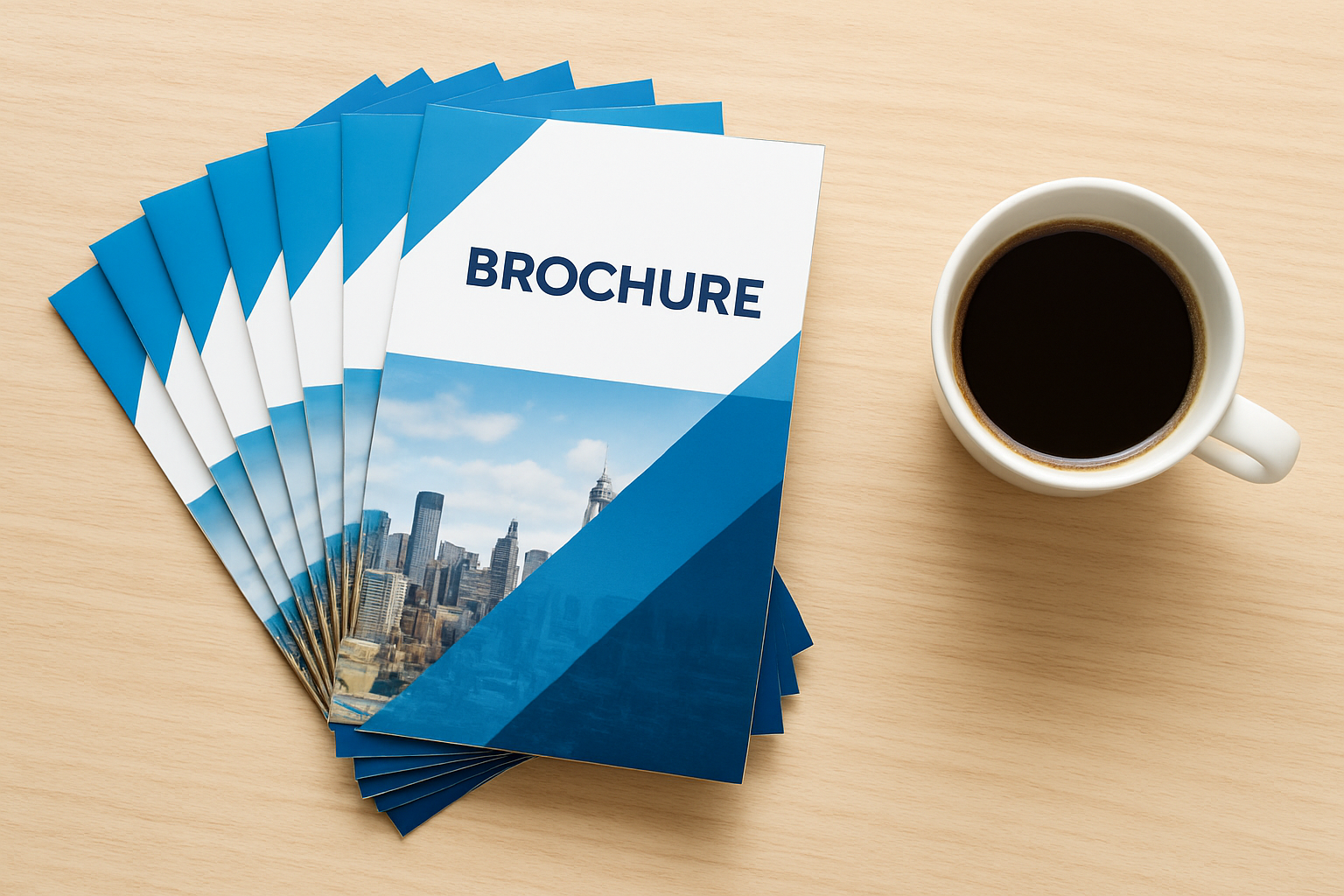
A finished batch of brochures ready for distribution at events, in-store, or through direct mail.
Choosing the Right Brochure Design Service for Your Business
Start by looking at a designer's past work for businesses similar to yours, since style and tone vary a great deal between industries. Above all, ask how revisions are handled and whether you receive ownership of the final design files once the project wraps up.
It also helps to pick a designer whose other work shows consistency across different formats. For instance, JMB Business Solutions is an Albany, New York, firm that focuses on website repair and custom web design for Capital Region small businesses. While brochure design is not listed among JMB's core services, the same attention to clear messaging and brand consistency that shows up in their web design work is a useful benchmark when evaluating any brochure designer's portfolio.
If your brochure project is part of a larger branding refresh that also touches your website, it is worth coordinating both pieces together. Businesses exploring a new online store or reviewing their overall marketing strategy often find it efficient to align print and digital materials at the same time rather than updating one and leaving the other outdated.
Checklist Before You Hire a Brochure Design Service
- Portfolio examples from a similar industry or audience
- Written scope covering panel count, revisions, and ownership of files
- Clear timeline with milestone dates for drafts and approval
- Confirmation of print-ready file format (bleed, CMYK, resolution)
- A plan for tracking response, such as a QR code or dedicated phone line
Frequently Asked Questions About Brochure Design Services
What is a brochure design service?
A brochure design service is a professional offering that plans, designs, and prepares print or digital brochures for a business, including layout, copy placement, imagery, and print-ready files. It typically covers everything from initial concept to a finished file ready for a printer.
How much does a brochure design service cost?
Pricing commonly ranges from a few hundred dollars for a simple tri-fold to over a thousand dollars for a multi-panel brochure with custom photography and copywriting. The final cost depends on complexity, number of revisions, and whether content is provided or created from scratch.
How long does it take to design a brochure?
A straightforward brochure usually takes one to two weeks from kickoff to final files, including a round or two of revisions. More complex projects with custom photography or heavy copywriting can take three to four weeks.
What's the difference between a bi-fold and tri-fold brochure?
A bi-fold brochure has a single fold creating four panels, while a tri-fold has two folds creating six panels. Tri-folds suit businesses with more services or steps to explain, while bi-folds work well for simpler, visual-heavy messages.
Can a brochure design service also handle printing?
Many brochure designers partner with a print vendor or can prepare press-ready files for a printer of your choice. It is worth confirming upfront whether printing is included or billed separately, since paper stock and finish affect cost.
Do I need a brochure if I already have a website?
A brochure still serves purposes a website cannot, such as handouts at events, in-person sales conversations, and leave-behinds for prospects without internet access at that moment. Many small businesses use both together rather than choosing one over the other.
What files do I need to provide to a brochure designer?
Most designers ask for your logo in vector format, brand colors, existing marketing copy, and any high-resolution photos you want included. If you do not have all of these, a good brochure design service can help source or create them.
Can a brochure design service create digital brochures too?
Yes, many designers now create interactive PDF brochures or digital versions optimized for email and web viewing alongside the print file. This gives businesses flexibility to share the same material across multiple channels.
What's the biggest mistake businesses make when designing a brochure?
The most common mistake is cramming too much text onto each panel instead of focusing on a clear message and a strong call to action. Overloaded brochures tend to get skimmed and discarded rather than kept and acted on.
Should I use a template or hire a professional brochure design service?
Templates can work for a quick, low-budget need, but they often look generic and are harder to adapt to your brand. A professional brochure design service produces a layout built around your specific message, audience, and print specifications.
How do I choose the right brochure design service for my business?
Look at a designer's past work for businesses similar to yours, ask how revisions and file ownership are handled, and get a clear scope in writing before starting. Clear communication about timeline and cost upfront prevents surprises later.
How many brochures should I print for an event or campaign?
A common starting point is printing 10 to 20 percent more than your expected attendance or mailing list size to account for extras and future use. Digital printing makes small reprints affordable, so it is often smarter to start with a modest run than to overcommit to a large quantity upfront.
What's the standard size for a brochure?
Most brochures in the United States use a standard letter sheet, 8.5 by 11 inches, folded into either a bi-fold or tri-fold layout. However, a brochure design service can recommend a custom size if your content, mailing requirements, or display setup calls for something different.
Does JMB Business Solutions offer brochure design?
JMB Business Solutions focuses on website repair and custom web design for small businesses in Albany and the Capital Region, and brochure design is not listed as a standalone service. Businesses already working with JMB on a website or branding project can ask whether a referral makes sense for print materials.
Do brochure design services include copywriting?
Some designers include basic copy editing or light writing, while others expect you to supply finished copy. It is best to confirm this during the scoping conversation so there are no gaps between design and content.
Final Thoughts on Hiring a Brochure Design Service
Choosing the right brochure design service comes down to clarity: a clear scope, a clear message on the page, and a clear call to action for the reader. Whether you need a simple tri-fold for a local event or a more detailed piece explaining several services, working with a designer who asks the right questions upfront tends to produce a brochure that actually gets used rather than discarded.
In addition, keeping your print materials visually consistent with your website strengthens your brand every time a customer encounters it, whether that's online or in person. Businesses in the Capital Region looking to align their digital presence with their broader marketing can learn more about complementary marketing services or request a consultation to discuss how their existing website supports the rest of their marketing materials. Ultimately, a thoughtfully chosen brochure design service pays for itself the first time a reader keeps the piece instead of tossing it.
