
Branding the Business: A Small-Business Website Guide
Branding the business starts with your website. See practical steps for Albany small businesses, then request a consultation with JMB Creative.
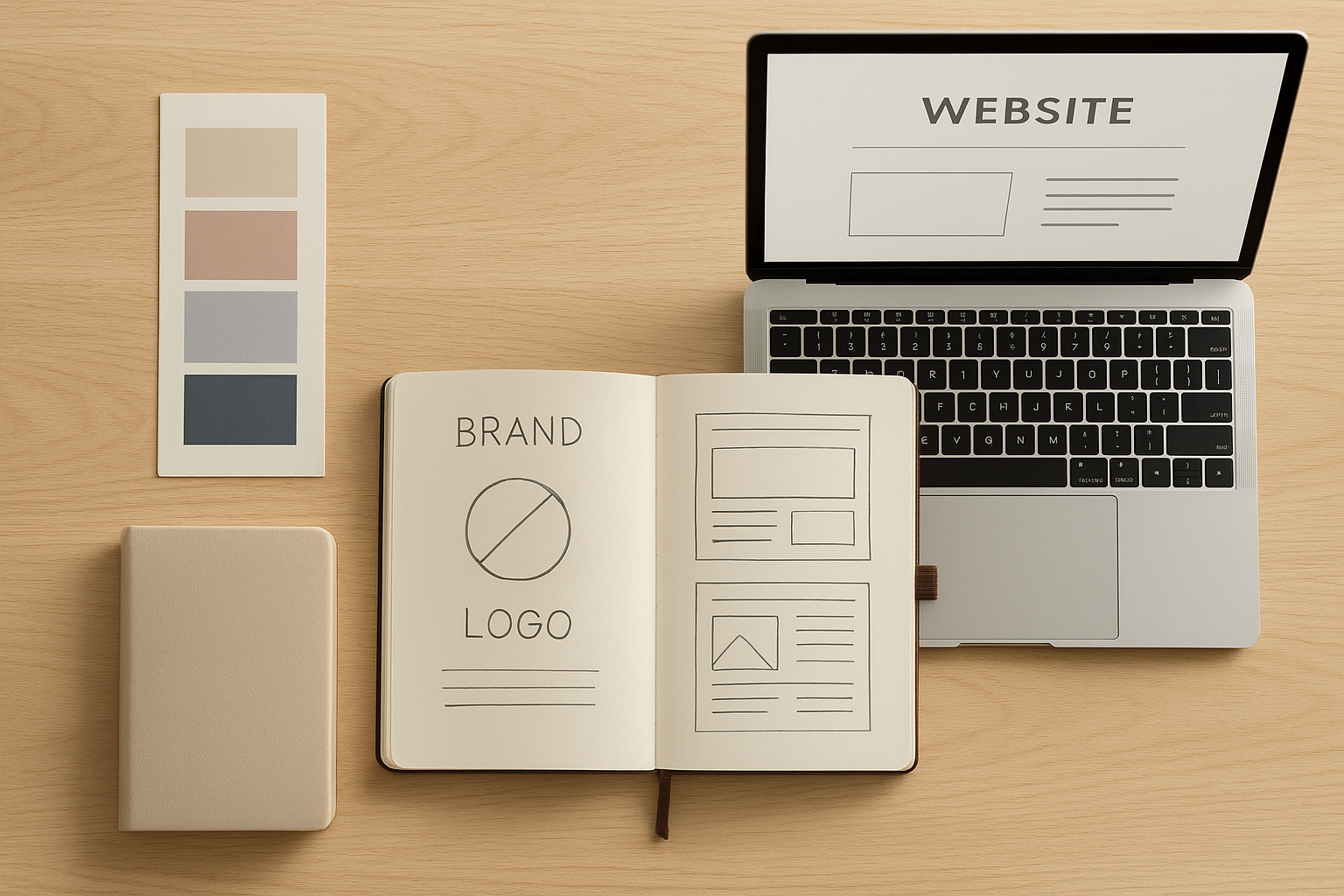
Branding the business is often the first thing small-business owners put off, usually because it sounds like a big, expensive project reserved for large companies. In reality, branding the business starts with something far more practical: making sure your website, your contact forms, and your calls to action all send the same clear message. For small businesses in Albany, New York, and the wider Capital Region, that often means repairing an existing site rather than starting over. This guide walks through what branding the business actually involves, which steps deserve priority, and when a focused repair makes more sense than a full rebuild.
Branding the business involves more than color choices; it starts with how your website communicates.
What Is Branding the Business?
Branding the business means aligning how your company looks, sounds, and performs online so customers recognize and trust it at every touchpoint. It covers your logo and colors, but it also includes your website's messaging, usability, and calls to action. In short, branding the business is as much about function as it is about visuals.
A business with strong visual branding but a broken contact form is still sending a mixed message. Likewise, consistent wording across pages helps visitors understand what you offer and why they should choose you over a competitor. According to Wikipedia's overview of brand management, a brand encompasses the name, design, and perception that distinguish one business from its competitors. For small businesses, that perception is shaped heavily by the website, since it is usually the first and most detailed impression a prospective customer gets.
Why Small Business Branding Matters in the Capital Region
Many small-business owners assume branding is a luxury reserved for companies with large marketing budgets. However, a brand consistency study by Marq found that presenting a brand consistently across every platform can increase revenue by as much as 23 percent. That figure matters even more for small businesses, since every website visitor is a potential customer who may never return if the site looks outdated or confusing.
In the Albany area specifically, competition among local service businesses is tight. As a result, a clear and consistent brand presence online can be the deciding factor between a phone call and a quiet exit. For example, outdated photos, a broken contact form, or an unclear call to action can quietly cost a business leads every day, even when the underlying product or service is excellent. The U.S. Small Business Administration's marketing guide makes a similar point: consistent messaging helps customers remember and choose a business over time.
Business Branding and Your Website: Why They're Linked
Business branding and website performance are not separate projects; they are two sides of the same conversation with your customer. In particular, your homepage headline, your navigation, and your contact page all communicate brand identity whether or not that was intentional.
Consequently, a site with dead links or a mobile layout that renders incorrectly undermines even a well-designed logo. Similarly, a confusing call to action tells visitors the business lacks a clear offer, regardless of how polished the colors look. That is why effective branding usually starts with a website audit rather than a new logo. You can see this approach in practice on the custom web design page, where visual identity and site function are treated as one project, not two.
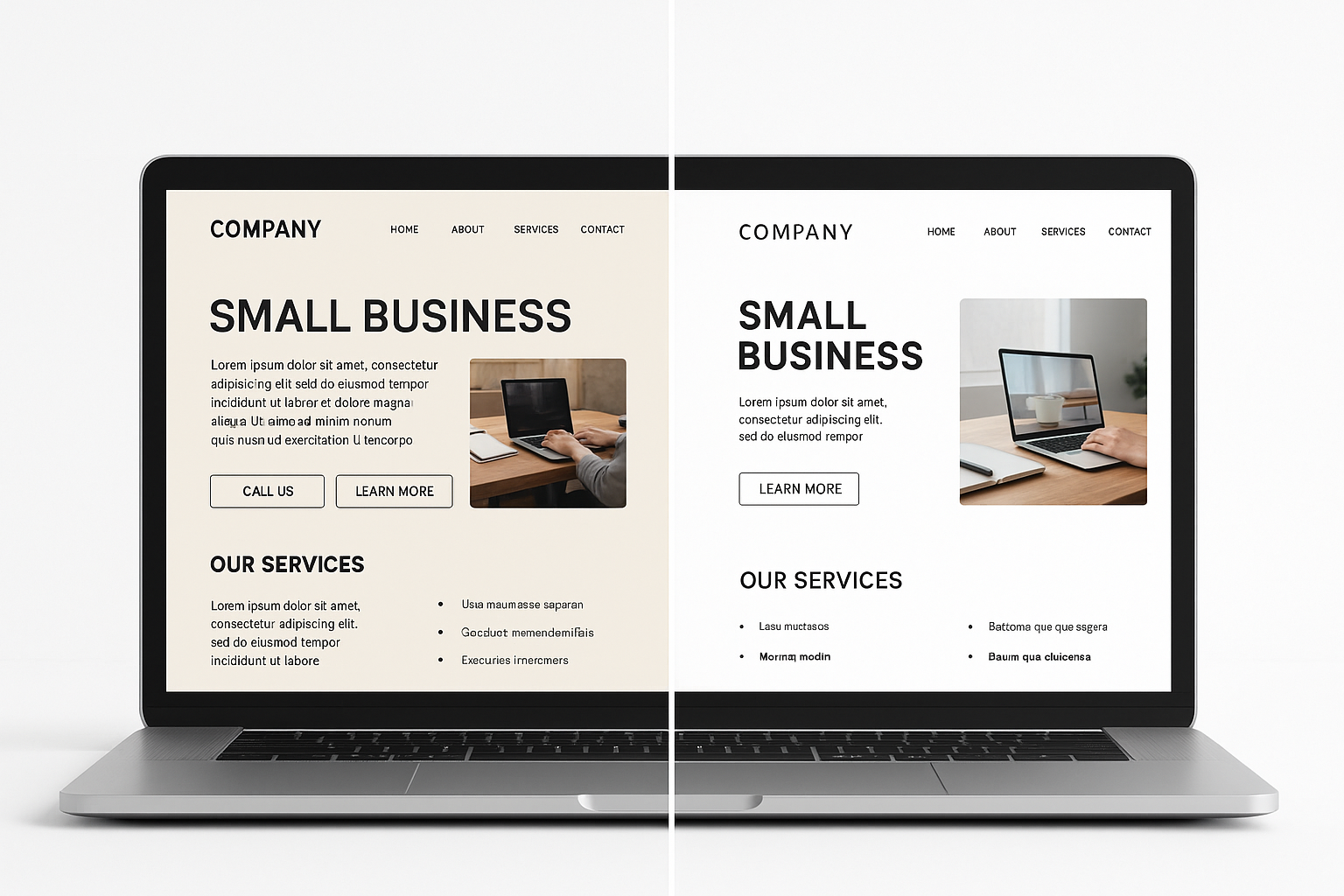
A clear before-and-after comparison shows exactly what changed during a website brand repair.
A Step-by-Step Process for Rebranding Your Website
Rebranding a website does not have to mean rebuilding it. In fact, most small businesses can realign their site with their brand through a short, focused process. The following steps outline that approach.
- Define your brand identity. Clarify what your business stands for, who your target customer is, and the core message every page should communicate.
- Audit your existing website. Review your homepage, contact forms, mobile layout, and calls to action to find where the site no longer matches your brand.
- Fix what is broken first. Repair dead links, non-working contact forms, and confusing mobile layouts before investing in new visuals, since a broken site undermines strong branding.
- Update visuals and messaging consistently. Apply consistent colors, fonts, photos, and wording across every page so visitors recognize the brand at each touchpoint.
- Test and review before launch. Confirm every repair works on desktop and mobile, then compare a written before-and-after summary to verify the issues were actually solved.
Common Brand Identity Mistakes to Avoid
Even well-meaning businesses make a few predictable mistakes when trying to tidy up their brand identity. Above all, inconsistency is the biggest offender: different fonts, colors, or tone across pages make a business feel disorganized rather than trustworthy.
In addition, stale content is a quiet brand killer. Outdated hours, old staff photos, or services you no longer offer send the wrong message to new visitors. Similarly, an unclear call to action leaves customers unsure what to do next, whether that's calling, booking, or filling out a form. According to the American Marketing Association's resources on branding, clarity and consistency are two of the most reliable predictors of brand recognition, which reinforces why these small details matter more than they seem.
Website Rescue or Full Rebuild: Matching the Fix to Your Brand
Not every branding problem requires a new website. For businesses with a site that mostly works but has specific issues, a scoped repair is usually the faster, more affordable path. JMB Creative's Website Rescue, for instance, addresses up to five agreed fixes, such as a broken contact form, dead links, or an unclear call to action, for a flat $495 within a standard half-day scope.
Every engagement starts with a backup, a written scope, and direct confirmation with the business owner before any work begins. It then finishes with a before-and-after summary so the changes are easy to verify before going live. However, when a website's structure can no longer support the business, such as outgrown platforms or a site that cannot be adapted, a separately quoted custom rebuild is the more honest recommendation. You can learn more or request a consultation to discuss which option fits. JMB Creative, based at jmbcreative.org, also applies this same scoped, owner-led approach to larger digital projects, including LeadFlow, a workflow platform built for home improvement companies, and other services like AI video creation for businesses looking to extend their brand further.
Local small businesses in the Capital Region benefit from a website that matches their in-person brand.
Frequently Asked Questions About Branding the Business
What is branding the business, exactly?
Branding the business means aligning your company's name, visuals, messaging, and website experience so customers recognize and trust it consistently. It covers logos and colors, but also includes how your website functions and communicates.
Why does branding the business matter for a small company?
Strong branding helps a small business stand out from local competitors and builds trust before a customer ever calls. A confusing or outdated website can undercut even a great product or service.
How long does branding the business usually take?
A focused website brand audit and repair can often be completed within a few days once the scope is agreed. A full custom rebrand with a new website typically takes several weeks, depending on complexity.
What does it cost to start branding the business well?
Costs vary widely, but small businesses can often start with focused fixes rather than a full rebuild. For example, JMB Creative's Website Rescue addresses up to five agreed fixes for a flat $495.
Can an existing website be rebranded without a full rebuild?
Yes, in many cases. If the core structure is sound, repairing broken forms, mobile layout, dead links, and unclear calls to action can refresh the brand without starting from scratch.
What is the difference between a logo and branding the business?
A logo is one visual element of a brand, while branding the business includes messaging, tone, website usability, and overall customer perception. A strong logo cannot fix a broken contact form or confusing navigation.
What are common mistakes businesses make when branding the business?
Common mistakes include inconsistent messaging across pages, outdated photos or hours, broken links, and an unclear call to action. These issues quietly undermine trust even when the overall design looks polished.
Does branding the business include my website's mobile experience?
Yes. Since most visitors browse on phones, a mobile layout that is hard to read or navigate directly damages brand perception. Mobile responsiveness is typically one of the first things reviewed in a brand audit.
How do I know if my site needs repair instead of a full rebrand?
If the site's structure still works but specific elements are broken or outdated, a scoped repair is usually enough. A full rebuild makes more sense when the site can no longer support the business's growth.
What should I prioritize first when branding the business on a budget?
Start with functional problems: broken contact forms, dead links, and confusing calls to action. Visual polish matters less if customers cannot actually reach or understand the business.
How does Website Rescue help with branding the business?
Website Rescue fixes up to five agreed issues on an existing site, such as broken forms, dead links, or outdated content, within a written scope. This lets a business improve its brand consistency without committing to a full rebuild.
Do I need a custom website to rebrand, or can repairs work?
Many businesses only need repairs to realign their website with their brand. A custom website is recommended only when the current site's structure or platform can no longer support the business's needs.
How often should a small business revisit its branding?
A light review once a year is reasonable, checking for outdated content, broken links, and messaging that no longer matches current services. Larger reviews make sense after a major service change or growth milestone.
What results can I expect after branding the business correctly?
Businesses often see clearer calls to action, fewer confused inquiries, and a more professional first impression once branding is consistent. A before-and-after comparison usually makes the improvement easy to see.
Final Thoughts on Branding the Business
Ultimately, branding the business doesn't require a complete overhaul to make a real difference. Instead, it usually starts with honest answers to a few questions: Does your website work on mobile? Is your contact form functioning? Does your call to action say exactly what you want visitors to do? For many Albany-area businesses, fixing those specific issues is enough to bring the brand back into alignment. When a site truly can't keep up anymore, a separately scoped custom rebuild is the more sustainable path forward. Either way, starting with a clear, written scope keeps the process predictable and the results easy to measure.